In this guide, I’m sharing my honest review of Aisle Planner vs HoneyBook for Wedding Planners and other Wedding Professionals.
If you’ve been researching these platforms, you’ve likely found yourself drowning in feature lists and marketing promises, wondering which one truly delivers for wedding professionals like yourself.
We’ll explore everything from client management capabilities and wedding-specific features to pricing structures and even hidden tips most reviews don’t mention. By the end of this article, you’ll have a clear understanding of which platform aligns better with your business model, workflow preferences, and growth aspirations.
Whether you’re a seasoned wedding planner looking to switch platforms or just starting your journey in the industry, this comparison will help you make an informed decision that could significantly impact your business efficiency and client satisfaction.
This is the same advice I offer my clients when they ask for recommendations on the CRMs available on the market.
According to Statista, in the US alone, CRM usage is expected to grow by over 9% between 2026 and 2030.
Let’s dive in to understand why.
Aisle Planner Overview
Considered one of the most comprehensive wedding planning CRMs on the market. Aisle Planner offers all the tools and features you need to manage your wedding planning business in one platform. The platform offers end-to-end client management, including lead management, proposals, contracts, invoicing, payment processing, timeline creation, guest list management, and seating arrangements, to name a few.
Aisle Planner is highly targeted to wedding businesses, including planners, photographers, venues, caterers, stylists, floral designers, and entertainers.
HoneyBook Overview
HoneyBook’s CRM is designed for small businesses. You can use HoneyBook to manage most of your business administrative processes, such as sending proposals, contracts, invoices, processing payments, and scheduling meetings. HoneyBook also incorporates AI tools, client communication, and automation to save you time and improve your processes.
HoneyBook’s target market is independent businesses, including event planners, business coaches, photographers, designers, copywriters, and more.
User Interface & Learning Curve
Before I could offer an honest review, I completed free trials of both Aisle Planner and HoneyBook. You can also access a Free Trial of Aisle Planner and a Free Trial of HoneyBook as well.
Here are my first impressions:
Aisle Planner First Impressions
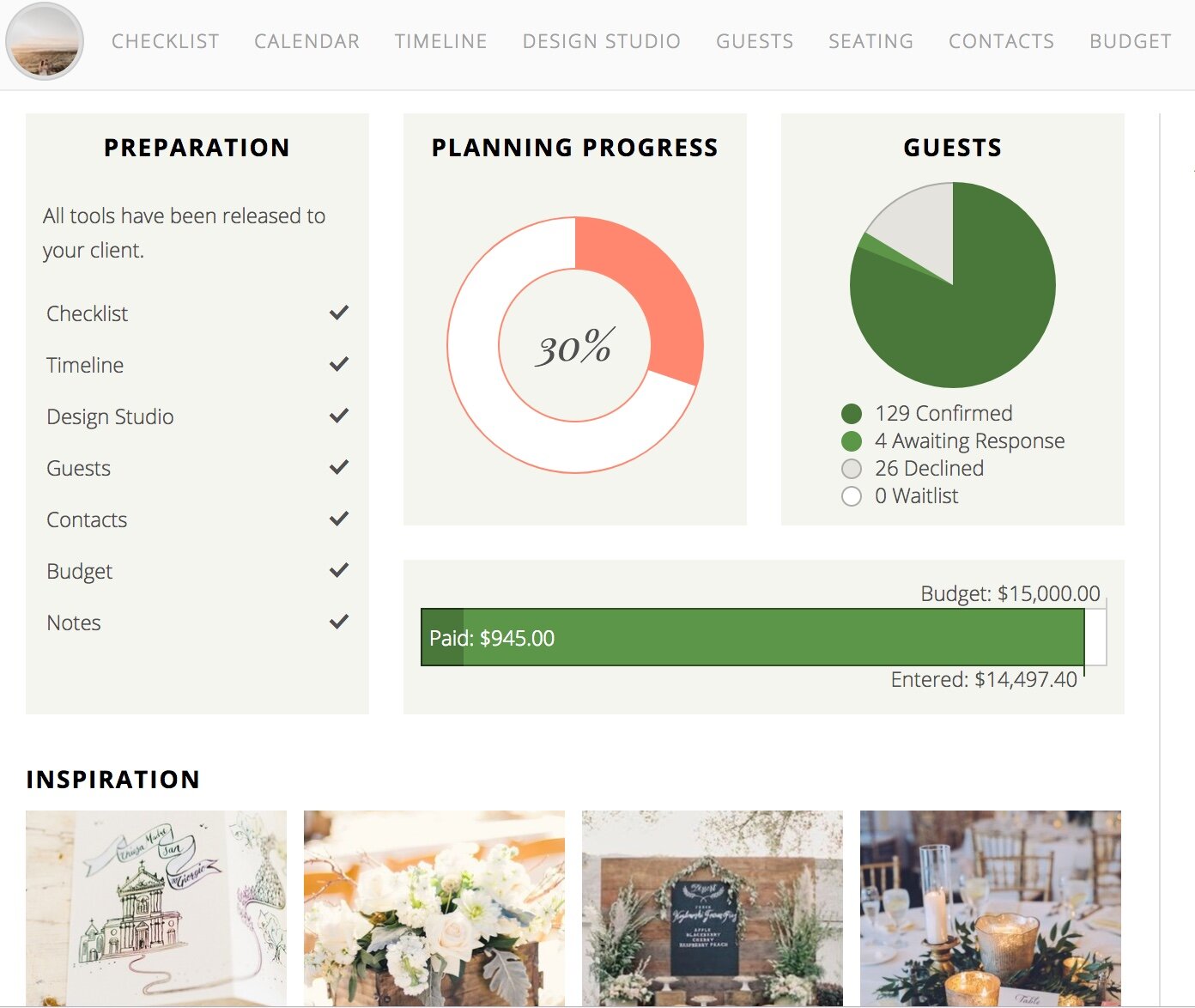
The Aisle Planner interface and user dashboard are simple. When you first access the platform, you can start with a test project that walks you through how to use CRM and the different functionalities. The platform is easy to navigate and is accessible on multiple devices. One of my favorite features of the platform is its 60-minute setup tutorial, which walks you through the process of having your account up and running in exactly 1-hour.
The platform also has an AI chatbot that can answer questions or direct you to resources relevant to your searches.
But if you’re someone who prefers hands-on instruction, you can also schedule a demo session with an Aisle Planner pro. During my trial, I had a demo session with the company’s founder. Her passion for the program and the wedding industry was refreshing. I also gained a better understanding of why the platform included so many features specific to the wedding industry that others didn’t, given her background as a Wedding Planner.
HoneyBook First Impressions
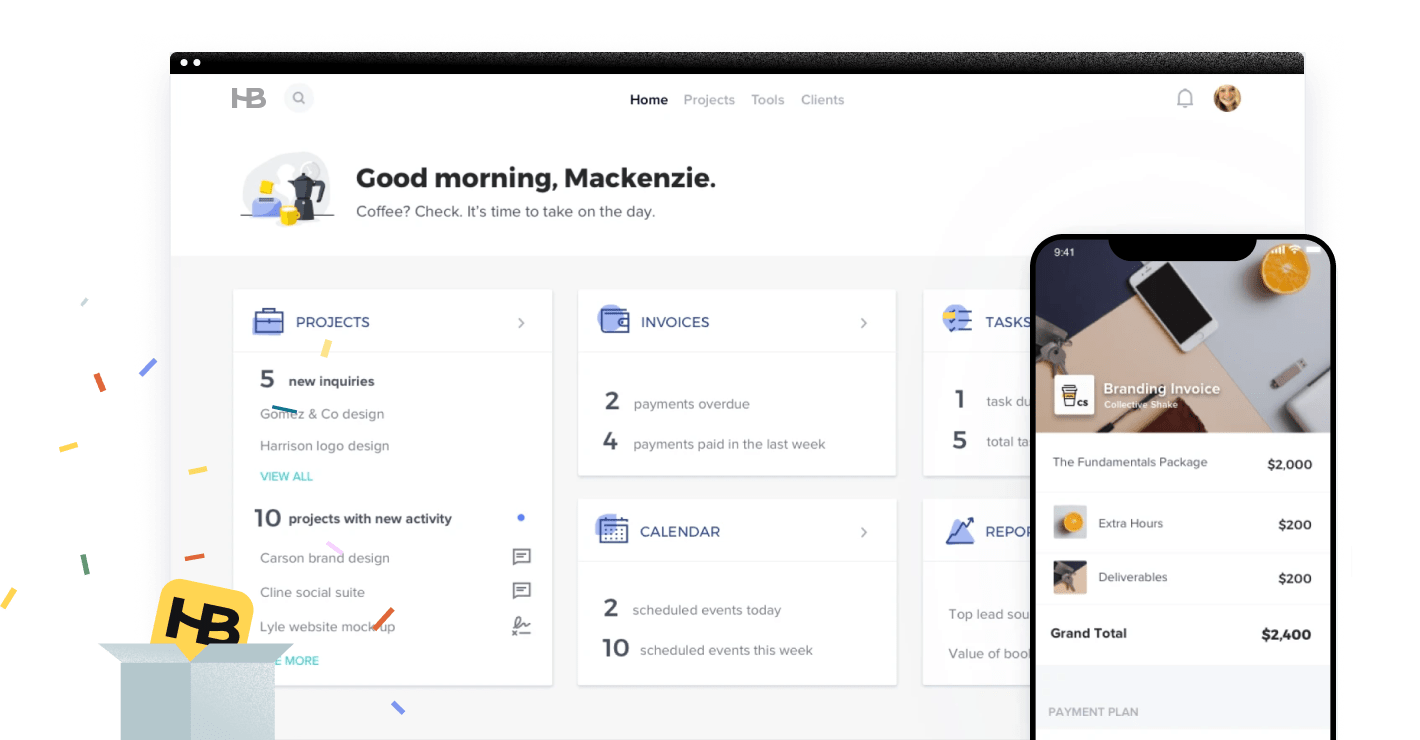
Similar to Aisle Planner, the HoneyBook interface and user dashboard are simple but more modern. One of my favorite features of their dashboard is the snapshot that shows all your leads, tasks, upcoming calendar items, and a revenue summary upon entry. I’ll be honest: nothing helps me prioritize more than seeing upcoming or past-due payments and items that require my immediate attention.
HoneyBook also has several instructional articles and video tutorials on YouTube that show how to complete various tasks on the platform. The platform also has a customer service chat, where you can ask questions or search the help center.
If you prefer to have the setup done for you, HoneyBook also offers trained professionals called “HoneyBook Pros” who can help set up your account and workflow.
Core Features Comparison: Aisle Planner vs HoneyBook
When it comes to the fundamental tools that power your wedding planning business, both platforms offer robust solutions – but with notably different approaches and strengths that will be addressed in the next section.
| Feature | Aisle Planner | HoneyBook |
| Client management capabilities | ☑️ | ☑️ |
| Project planning tools | ☑️ | ☑️ |
| Financial tools and payment processing | ☑️ | ☑️ |
| Document management | ☑️ | ☑️ |
| Templates availability | ☑️ | ☑️ |
Wedding Specific Features
One of the main advantages of the Aisle Planner platform over HoneyBook is the wedding-specific project planning features. As a program designed by and for wedding professionals, Aisle Planner includes options such as timeline creation, guest list management, layout & seating, style guides, mood boards, vendor collaboration, and a design studio that doubles as a working space with clients.
As an event planner who knows too well the many logistics that must be coordinated for weddings and other events, having a platform that allows you to combine all your project management features is priceless. This is Aisle Planner’s biggest advantage over HoneyBook.
Since the HoneyBook platform is more targeted to independent businesses, the features are not as specific to wedding professionals as Aisle Planner is, but HoneyBook does make up for it in other areas.

Automation & Communication
Personally, one of my favorite HoneyBook features is the ability to automate your workflow and communicate with clients through the platform. As a busy business owner, being able to streamline my client onboarding and offboarding processes helps me stay on task, save time, and deliver a consistent experience for all clients.
While Aisle Planner has an automated lead-capture and project-checklist feature that can be applied to all new projects, HoneyBook’s conditional workflow automation and communication tools are more robust.
Here’s a quick example of what a part of that process might look like for your wedding planning business on HoneyBook:
- A client completes a lead form on your website and shows up as a lead in your HoneyBook account
- This automatically triggers a “Thank you for your inquiry” email once the form is received
- If the client meets your intake criteria, they are sent a meeting scheduling link and additional information about your services
- Once the meeting is scheduled, the client receives a confirmation and automated meeting reminders until your consultation call
- If the client meets your intake criteria, they are sent a meeting scheduling link and additional information about your services
- This automatically triggers a “Thank you for your inquiry” email once the form is received

Financial Management & Invoicing
While both platforms offer financial management and invoicing options, the focus of these tools differs between them.
HoneyBook stands out in financial management with:
- Multiple payment processing options, including ACH, credit card, and payment schedules
- Automated payment reminders and recurring billing
- Customizable proposal and contract templates
- Detailed financial reporting and forecasting
- Integration with accounting software such as QuickBooks
Aisle Planner offers more wedding-specific financial tools:
- Budget vs. actual spending comparisons
- Wedding budget tracking with category-specific breakdowns
- Vendor payment scheduling and tracking
- Basic invoicing and payment processing
- Wedding-specific expense categorization
Pricing Breakdown: Aisle Planner vs HoneyBook
Aisle Planner Pricing & Plans
Aisle Planner has four (4) pricing options as follows:
- Sales Essentials – $49.99 per month
- Up to 15 Projects – $69.99 per month
- 16 to 25 Projects – $109.99 per month
- 26 – 50 Projects – $164.99 per month
- 51 – 100 Projects – $229.99 per month
Since Aisle Planner charges based on the number of active projects, all pricing levels can access the full features of the platform without any limitations. This includes all sales, business management, and project management tools – from lead management to guest website & RSVP and document storage. On the other hand, your pricing increases with the number of projects. As a business owner, I can honestly say this should not be a deterrent, as a CRM is a necessary investment for your business.
HoneyBook Pricing & Plans*
HoneyBook has three (3) pricing options as follows:
- Starter Plan – $36 per month
- Essentials Plan – $59 per month
- Premium Plan – $129 per month
Unlike Aisle Planner, HoneyBook’s pricing plans offer unlimited projects; however, your pricing level determines the features you have access to. The Premium Plan gives you access to all platform features. At the same time, the Starter Plan provides access to most core features, except automation, the scheduler, multiple team members, expense management, integrations with apps such as QuickBooks, and the AI Assistant.
Pros and Cons: Aisle Planner vs HoneyBook
Aisle Planner strengths and weaknesses
Aisle Planner’s strength is its wedding-specific tools, especially in project management. As a wedding professional, you can complete not only client and business management tasks in Aisle Planner, but you can also plan your entire event.
Aisle Planner’s weakness is the limitations of the conditional workflow automation and direct client communication available within the platform. Automation includes autoresponders, to-do list generation, reminders for guests and clients, and payment notifications (to name a few). The platform doesn’t allow you to send automated emails directly to clients, which can save time.
HoneyBook strengths and weaknesses
HoneyBook’s strength lies in its workflow automation and client communication. The ability to map out your entire client workflow and automate parts of that process is a huge time-saver. You can also send emails to clients directly from within the platform with an email integration.
HoneyBook’s weakness is that the platform is designed to serve a wider audience than Aisle Planner and, as such, does not include project management tools specific to wedding planners, such as creating a timeline or seating chart.
Best Suited For
Aisle Planner is best suited for Wedding Professionals such as Wedding Planners, while HoneyBook can be used by most independent businesses. In my experience, Wedding Planners who use HoneyBook often need to use another project management tool to support their event planning.
Aisle Planner stands out as the ideal choice if:
- Your business focuses exclusively on weddings
- You need detailed wedding-specific planning tools
- You value having built-in design and inspiration features
- Your clients are highly involved in the planning process
- You prioritize having wedding-specific templates and workflows
HoneyBook emerges as the better option if:
- You handle multiple types of events beyond weddings
- Client communication and automation are your top priorities
- You need robust financial management tools
- You’re looking for more flexible payment options
- You value a more modern, streamlined interface
Conclusion and Recommendation: Aisle Planner vs HoneyBook
Based on my research and testing of Aisle Planner and HoneyBook, I can honestly say both programs are great for client relationship management. They both offer the tools you’ll need to manage your business effectively, bringing their unique strengths to wedding professionals. The ultimate decision will depend on the features you value the most in your business and how you work with clients.
For new wedding planners just starting their business, HoneyBook’s intuitive interface and broader business management features might provide a gentler learning curve. However, seasoned wedding professionals might find Aisle Planner’s wedding-specific features more aligned with their established workflows.
Remember that both platforms offer free trials, and I strongly recommend taking advantage of these before making your final decision. Spend time exploring the features that matter most to your daily operations, and consider how each platform would integrate with your existing business processes.
What’s most important is choosing a platform that not only meets your current needs but can also scale with your business as it grows. Whether you choose Aisle Planner’s wedding-focused approach or HoneyBook’s versatile business management system, both platforms have proven track records in helping wedding professionals succeed.
Ultimately, the right choice is the one that makes your day-to-day operations smoother and allows you to focus on what really matters – creating perfect wedding experiences for your clients.